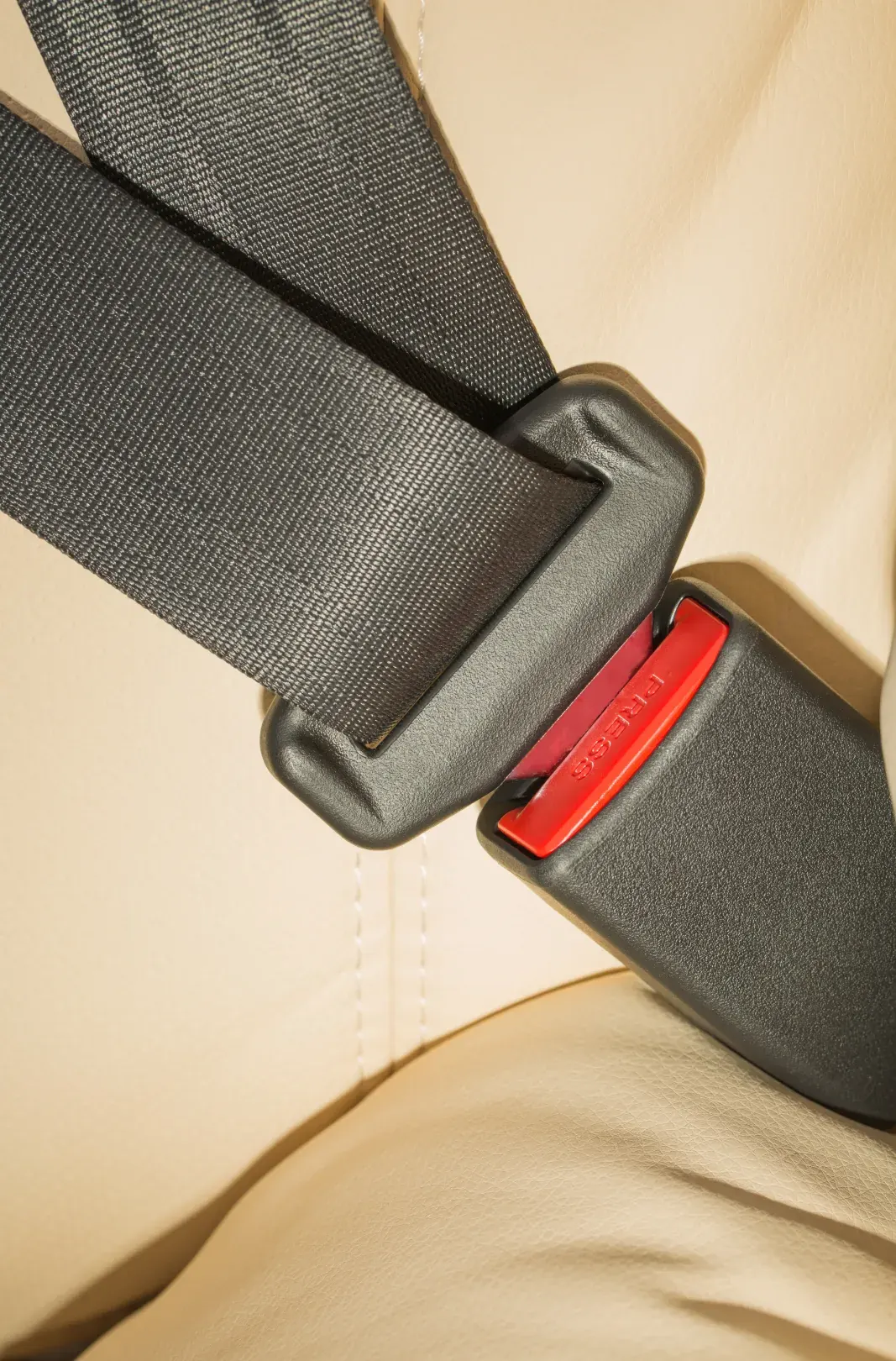
Webbing
The woven strap is the part that actually restrains the occupant. Everything else in the assembly exists to hold it, guide it, or connect it to the vehicle. Webbing is engineered for a combination of properties that are difficult to achieve together: high tensile strength, a controlled amount of stretch under load, resistance to abrasion, and durability under long-term exposure to sunlight and temperature swings.
That controlled stretch matters. Webbing that did not give at all would transfer load to the body far more abruptly; webbing that stretched freely would let the occupant travel too far. The weave is what balances the two.
In service, webbing is also the component most exposed to everyday damage — trapped in a door, dragged over a seat frame, contaminated by cleaning products, or slowly degraded by sunlight. It is the first thing to look at during any inspection, along its full length and on both faces.
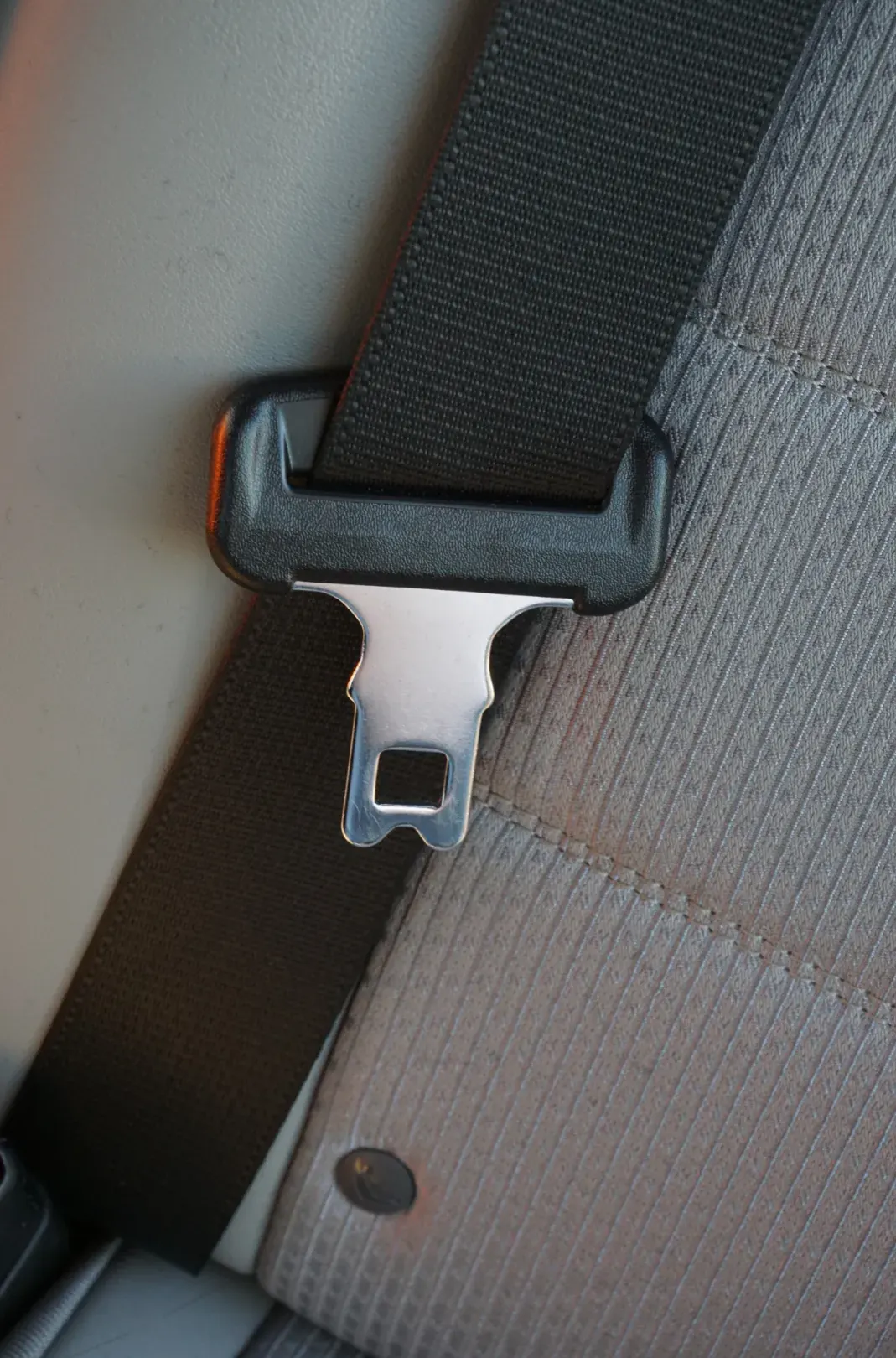 Webbing weave · Latch plate
- Webbing — what varies
- WidthSupplied in defined widths; the vehicle's hardware determines which applies
- Weave & finishAffects surface feel, edge durability and how the belt runs through guides
- LengthAlways specific to the vehicle and seating position
- Common damageCuts, fraying, burns, chemical staining, stiffening, fading